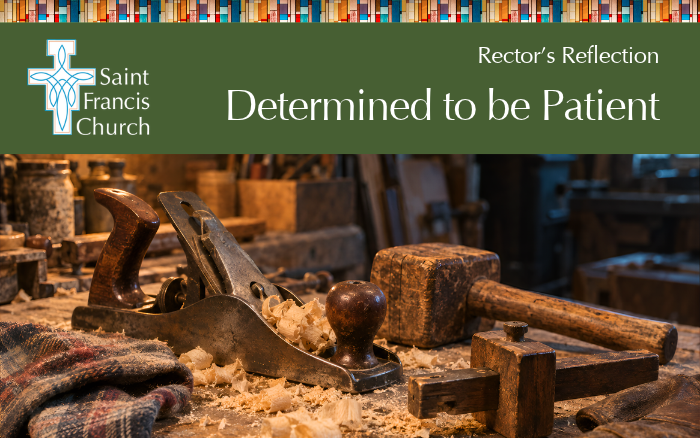
I remember my dad teaching me the fundamentals of patience and determination when we were in his woodshop. I was working on my Pinewood Derby car for Cub Scouts. My dad had helped with the design by cutting the wood on the bandsaw to my rough specifications. After he’d cut it, he gave it to me to sand. I gave it back to him about 30 seconds later and told him I was done. We played this game of back and forth about five times before he pressed it into my hands and said, “You need to take your time and sand this until it is smooth. It will not look good if we paint it and the wood is still rough and splintered.” And he was right.
I took the car back and sanded it for what seemed an eternity, and what was in reality probably five minutes. He looked it over and said it was better, but there was still a lot to be done. As I sanded and he worked on a different project, he told me about the importance of patience and perseverance, saying that anything worth doing was worth doing well. At the time, it seemed like another chance for him to not do what I wanted, which happened all the time. But having watched students, kids in youth group, and my own children plow through projects, I understand and appreciate his patience with me.
It would have been far easier for him to take the car from me and sand it himself. He liked sanding, and he didn’t like to hear me complaining; doing it himself could have been a win/win for him, but not for me. Patience, perseverance, and determination are too often not viewed as talents but as underlying features of talent. But determination is a talent in itself. It took me twelve years of mediocre performance in public school to realize that I needed to do well in all my classes, not just the ones I liked.
Patience and determination in sanding and academics is one thing; being determined to be patient with people is something altogether different. No person we meet is a finished product, nor did they become who they are all at once. We are all the product of our environments, choices, abilities, likes and dislikes. We are shaped every day by different forces in the world.
When someone tries my patience, my instinct is twofold: first, to get as far away as possible from said individual, and to write them off as not worth my time. Neither instinct is born out of love; both are born out of self-preservation and selfishness. Jesus doesn’t suggest that we love our neighbors, nor does he say we might love our enemies; we are flat-out told to love our neighbors, especially our enemies and those who hate us.
And there’s never been a shortage of hate to go around. People like to act as though we have more hate now than ever before, but a simple look at our past shows that hate’s been strong for as long as there’s been written history (and likely beforehand too). Hate isn’t new, but neither is love.
What could be new is that the platforms we use to spread hate, malice, and anger could also be used to spread love, gentleness, and grace. What would our lives look like if we responded to hate with love? This isn’t a philosophical question: what would YOUR life look like if you did this? Are we willing to try this? Can we become determined to be patient with one another, and answer hate with love? We have an unprecedented ability to communicate with the world around us; are we using it to love as we are loved?
The Rev. Jason Shelby
Rector