
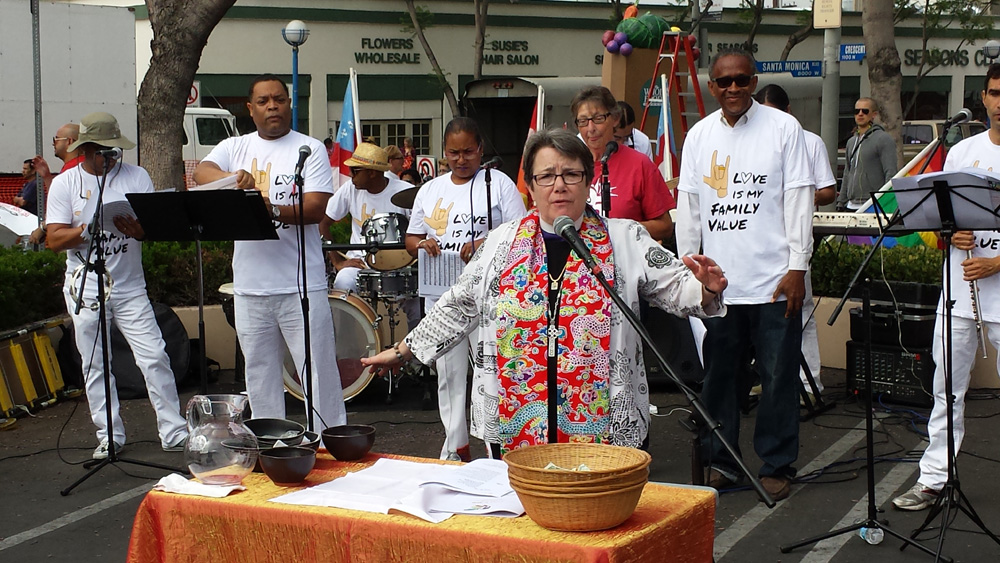
In June of 2014, I found myself standing in a parking lot in Los Angeles, preparing to celebrate Holy Eucharist before the start of the LA Pride Parade.
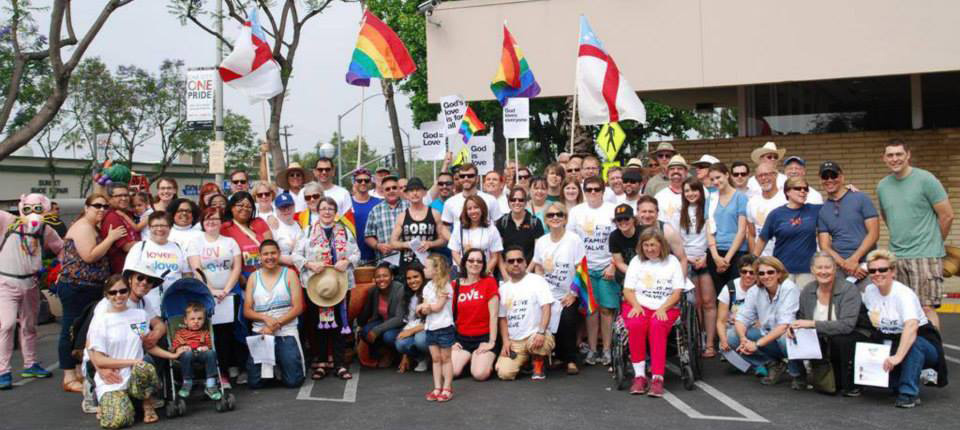
Bishop Diane Jardine Bruce led the service. Around me were people of every age, ethnicity, and background. Some were Episcopalians. Some belonged to other faith traditions. Some were lifelong churchgoers; others seemed less certain of where they fit. Rainbow banners fluttered in the morning air beside the Diocese of Los Angeles parade float. My friend, Amy Sisson, was there with her granddaughter, Luna. Together we prayed, sang, and gathered around the common table.
It remains one of the most joyful Eucharists I have ever attended.
What made the experience so meaningful was not simply that it happened before a Pride parade. It was the realization that God was present there, just as surely as in any cathedral or parish church. Surrounded by celebration, laughter, and hope, I was reminded that Christ’s invitation extends to all people and into every corner of our lives.
An earlier experience shaped my presence there. Before discovering The Episcopal Church, I came from a conservative Christian tradition that was firmly opposed to same-sex relationships. When I first began attending All Saints Church in Pasadena, I knew very little about Episcopalians. Each Sunday, before communion, I heard the invitation: “Whoever you are, and wherever you are on your journey with God, you are welcome at God’s table.”
My first reaction was skeptical: “We’ll see.”
Then I began paying attention. I noticed same-sex couples worshipping openly. I met LGBTQ+ Christians serving in ministry and leadership. I saw people welcomed not as projects to be fixed, but as beloved children of God. Soon enough, I realized that the welcome was genuine.
And I learned that the Episcopal Church has affirmed this welcome for many years. In 1976, General Convention declared that “homosexual persons are children of God who have a full and equal claim with all other persons upon the love, acceptance and pastoral concern and care of the Church.” Since then, the Church has continued to expand full participation in its sacramental and communal life.
This commitment grows from the Gospel itself. When Jesus was asked about the greatest commandment, he replied, “You shall love the Lord your God with all your heart… and you shall love your neighbor as yourself” (Matthew 22:37-39). The New Testament also reminds us, “Do not neglect to show hospitality to strangers” (Hebrews 13:2).
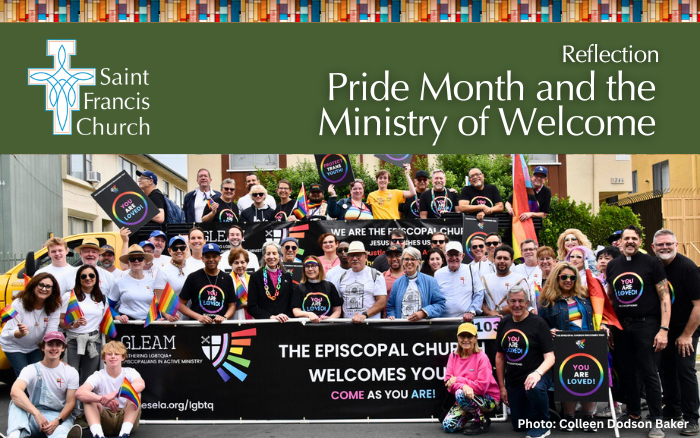
At St. Francis, we strive to live out that hospitality. We are blessed by gay, lesbian, bisexual, transgender, and queer parishioners; by single people and married couples; by families with children and those who come solo seeking community. We are blessed by every person who walks through our doors searching for God.
I am deeply grateful for Fr. Jason’s commitment to inclusion and for the welcoming spirit of this parish. My own journey into The Episcopal Church eventually led me to be received at St. Andrew’s in Torrance and later to find a home at St. Francis. Along the way, I discovered something profound: Christian hospitality is not merely about being polite. It is about making room at the table.
Pride Month gives us another opportunity to celebrate that ministry of welcome. My prayer is that St. Francis will continue to be a place where all people can worship, grow, pray, and encounter the love of Christ. In a world that often draws lines between people, may we continue to gather around one table, trusting that God’s welcome is always wider than our own.
Wayne Hastings
wayne@stfrancispalosverdes.org